DISCONNECTED FOR NON-PAYMENT: Web Payments received prior to 4:00pm will be reconnected same-day, otherwise reconnection will be made by the end of the next business day.
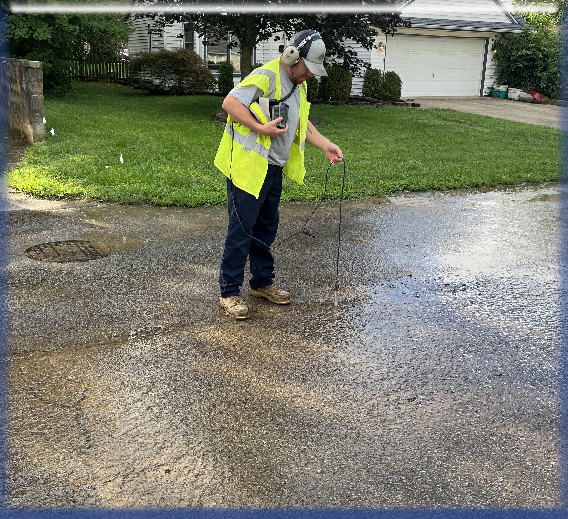
To report possible leaks or outages, please e-mail mmarr@hcwd2.org or call our office at (270) 737-1056 ext. 221 right away.
IF YOUR WATER HAS BEEN DISCONNECTED FOR NON-PAYMENT: Web Payments received prior to 3:00pm will be reconnected same-day, otherwise re-connection will be made by the end of the following business day.
To report possible leaks or outages, please e-mail mirwin@hcwd2.org or call our office at (270) 737-1056 ext. 221 right away.
Our account services department is more than happy to start your account in person or our website at hcwd2.org. Please bring in a photo ID, $60 deposit (cash or card) and a copy of your lease if you are renting.
Is a deposit required for a new account?
Yes, there is a $60 deposit required on all new accounts.
Can I access my account online?
Of course! Customers are welcome to access their accounts online 24/7 via Customer Portal.
Award-winning water utility, supplying Hardin County, Ky and surrounding areas with the best tasting water!
For the second week in #WomensHistoryMonth we want to highlight Ellen H. Swallows Richards and her impact on modern water-quality.
Born in Massachusetts (MA) in 1842, Ellen H. Swallow Richards entered Vassar College as a special student in 1868 with $300 she had saved. Drawn to chemistry, she was turned down by all industrial chemist positions she applied to upon her graduation from Vassar 2 years later. She became the first woman in America to be accepted by a scientific school when she was accepted as a special student at MIT.
Within 3 years, Richards received a second bachelor’s degree from MIT, and a master’s degree from Vassar. She had hopes of earning a Ph.D. but at the time MIT didn’t award doctorates to women. From 1873 to 1878, Richards taught chemistry without a salary or title. After getting married in 1875, she was able to further women’s scientific education at MIT by volunteering her services and $1,000 annually, which helped establish the Women’s Laboratory at MIT in 1876, though it closed in 1883 after MIT began regularly awarding undergraduate degrees to women. In 1879, Richards was credited as an assistant instructor in several area, but she still had no salary.
In 1884, the nation’s first laboratory of sanitary chemistry was opened at MIT with Richards being appointed as an instructor. In 1887, At the request of the MA State Board of Health (for which she served as the official water analyst from 1887-97 while also instructing at MIT), Richards and her assistants performed a water-quality survey on MA’s inland bodies of water, most of which had already been polluted with industrial waste and municipal sewage. The survey results led to the nation’s first state water-quality standards and the first modern municipal sewage treatment plant in Lowell, MA.
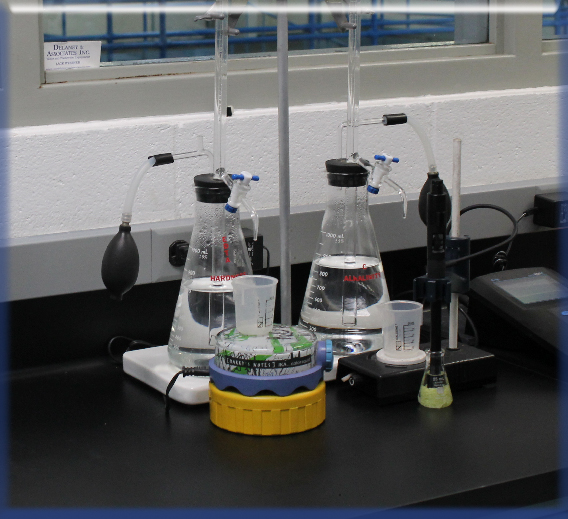
Ellen Swallow Richards pioneered sanitary engineering, even writing a sanitary engineering classic text. The samples Richards analyzed were the foundation for modern water-quality standards which protect our environment, including the source water for drinking water.
Source and photo credit: Science History Institute (sciencehistory.org)
Today we are celebrating the incredible women of Hardin County Water District No. 2 who work in our treatment plants and distribution system.
Caroline and Joy are water treatment operators at our White Mills Water Treatment Plant. Caroline has worked for HCWD2 for 4 years while Joy has worked for the District for 14 years. Both women hold their class IVA drinking water license. As water treatment operators, they work hard to ensure our treatment plants run smoothly, and produce safe drinking water for the community.
Savanagh is a distribution technician who is dedicated to helping maintain the HCWD2 water distribution system. She has worked for the District for one year, and her hard work helps to allow HCWD2 to continue to supply customers with clean water.
March is #WomensHistoryMonth and each week this month we will be highlighting women in history who made an impact on the water industry. The first woman we are highlighting is Ruth Chickering Clusen.
Born in Wisconsin in 1922, Ruth Chickering Clusen worked as a teacher until she became president of the Wisconsin League of Women Voters (LWV) in 1962 and served until 1966. From 1966 to 1970, she was chairperson for the LWV National Committee on Water Resources, during that time (68-70) Clusen was also chairperson of the League's National Committee on Environmental Programs and Projects
In 1974, Clusen became president of the National League of Women Voters. While president of the LWV, she worked to assure that the 1974 Safe Drinking Water Act (SDWA) was passed. During her national LWV presidency, the League promoted a common-sense conservation measure which included advocating for recycling and educating communities about source separation of solid waste. Ruth Chickering Clusen also moderated the televised 1976 presidential campaign debates between President Gerald Ford and future President Jimmy Carter.
From 1978 to 1981, she was Assistant Secretary of Energy for the Environment in the Department of Energy under President Jimmy Carter. During Clusen's time as Assistant Secretary of Energy, she worked to develop and implement a strong National Energy Policy. In an interview later on in life, Clusen would note that her concerns about the environment, especially water pollution, were because of Green Bay's water quality problems.
The 1974 Safe Water Drinking Act that Clusen worked hard to get passed, is still in effect today (with amendments in 1986 and 1996) and ensures that public health is protected by regulating the nation's public drinking water supply. The SDWA authorizes the U.S. Environmental Protection Agency (US EPA) to set, and enforce, national health-based standards for drinking water. The standards protect public health against both naturally-occurring and man-made contaminants that may be found in drinking water. Ruth Chickering Clusen died in 2005 but the impacts she made on the water industry, along with environmental conservation as a whole, live on.
Source and photo credit: Wisconsin Conservation Hall of Fame (wchf.org) ... See MoreSee Less
Duct tape isn't just used up in space, it's also used underground on water pipes. Before installing new water lines, our crews duct tape tracer wires to the pipes. Tracer wires help accurately locate water lines after they've been buried underground. Knowing the exact location of water lines can prevent damage during future excavations. ... See MoreSee Less
It has come to our attention that Yahoo Scout-AI is changing the due dates on our bills when generating summaries of our E-Bills. Please make sure that you are checking your official bill, not just a summary, to confirm the actual due date of your water bill so you don't make a late payment. See below for the due dates of our water bills, which are divided into 4 cycles based on location. If you are unsure which billing cycle you are in, you can check your water bill or call our office at (270) 737-1056.
𝐁𝐥𝐮𝐞 𝐂𝐲𝐜𝐥𝐞 𝟐 𝐁𝐢𝐥𝐥𝐬 : Due on the 1st of each month 𝐆𝐫𝐞𝐞𝐧 𝐂𝐲𝐜𝐥𝐞 𝟒 𝐁𝐢𝐥𝐥𝐬 : Due on the 8th of each month 𝐑𝐞𝐝 𝐂𝐲𝐜𝐥𝐞 𝟏 𝐁𝐢𝐥𝐥𝐬 : Due on the 15th of each month 𝐎𝐫𝐚𝐧𝐠𝐞 𝐂𝐲𝐜𝐥𝐞 𝟑 𝐁𝐢𝐥𝐥𝐬 : Due on the 22nd of each month
Here are some tips to ensure that you don't miss the due date for your water bill or any other bills:
-Enroll in AutoPay so payments are automatically made on the bill's due date. -Disable the AI-generated email summaries. AI-generated summaries can make mistakes...don't let AI mistakes cost you money. The option to disable AI-generated summaries is usually located next to the summary. -Mark your bill's due date on your calendar for the next several months. -Set reminders for the bill's due date so you don't forget to pay. ... See MoreSee Less
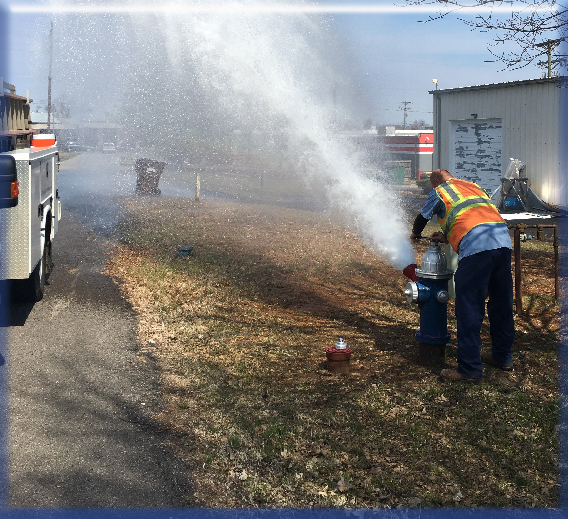
Our amazing field crews have been out day and night this week fixing leaks and responding to customer issues in the cold weather. Snow and ice doesn’t stop them from working their hardest to keep customers in service. ... See MoreSee Less
Hardin County Water District No. 2
Award-winning water utility, supplying Hardin County, Ky and surrounding areas with the best tasting water!
For the second week in #WomensHistoryMonth we want to highlight Ellen H. Swallows Richards and her impact on modern water-quality.
Born in Massachusetts (MA) in 1842, Ellen H. Swallow Richards entered Vassar College as a special student in 1868 with $300 she had saved. Drawn to chemistry, she was turned down by all industrial chemist positions she applied to upon her graduation from Vassar 2 years later. She became the first woman in America to be accepted by a scientific school when she was accepted as a special student at MIT.
Within 3 years, Richards received a second bachelor’s degree from MIT, and a master’s degree from Vassar. She had hopes of earning a Ph.D. but at the time MIT didn’t award doctorates to women. From 1873 to 1878, Richards taught chemistry without a salary or title. After getting married in 1875, she was able to further women’s scientific education at MIT by volunteering her services and $1,000 annually, which helped establish the Women’s Laboratory at MIT in 1876, though it closed in 1883 after MIT began regularly awarding undergraduate degrees to women. In 1879, Richards was credited as an assistant instructor in several area, but she still had no salary.
In 1884, the nation’s first laboratory of sanitary chemistry was opened at MIT with Richards being appointed as an instructor. In 1887, At the request of the MA State Board of Health (for which she served as the official water analyst from 1887-97 while also instructing at MIT), Richards and her assistants performed a water-quality survey on MA’s inland bodies of water, most of which had already been polluted with industrial waste and municipal sewage. The survey results led to the nation’s first state water-quality standards and the first modern municipal sewage treatment plant in Lowell, MA.
Ellen Swallow Richards pioneered sanitary engineering, even writing a sanitary engineering classic text. The samples Richards analyzed were the foundation for modern water-quality standards which protect our environment, including the source water for drinking water.
Source and photo credit: Science History Institute (sciencehistory.org)
#WomeninHistory #waterhistory #history ... See MoreSee Less
0 CommentsComment on Facebook
Today we are celebrating the incredible women of Hardin County Water District No. 2 who work in our treatment plants and distribution system.
Caroline and Joy are water treatment operators at our White Mills Water Treatment Plant. Caroline has worked for HCWD2 for 4 years while Joy has worked for the District for 14 years. Both women hold their class IVA drinking water license. As water treatment operators, they work hard to ensure our treatment plants run smoothly, and produce safe drinking water for the community.
Savanagh is a distribution technician who is dedicated to helping maintain the HCWD2 water distribution system. She has worked for the District for one year, and her hard work helps to allow HCWD2 to continue to supply customers with clean water.
#internationalwomensday #WomensDay2026 #IWD2026 ... See MoreSee Less
3 CommentsComment on Facebook
Daffodils are blooming and rain is falling. Spring is here and we are enjoying it's beauty throughout Hardin County. ... See MoreSee Less
0 CommentsComment on Facebook
March is #WomensHistoryMonth and each week this month we will be highlighting women in history who made an impact on the water industry. The first woman we are highlighting is Ruth Chickering Clusen.
Born in Wisconsin in 1922, Ruth Chickering Clusen worked as a teacher until she became president of the Wisconsin League of Women Voters (LWV) in 1962 and served until 1966. From 1966 to 1970, she was chairperson for the LWV National Committee on Water Resources, during that time (68-70) Clusen was also chairperson of the League's National Committee on Environmental Programs and Projects
In 1974, Clusen became president of the National League of Women Voters. While president of the LWV, she worked to assure that the 1974 Safe Drinking Water Act (SDWA) was passed. During her national LWV presidency, the League promoted a common-sense conservation measure which included advocating for recycling and educating communities about source separation of solid waste. Ruth Chickering Clusen also moderated the televised 1976 presidential campaign debates between President Gerald Ford and future President Jimmy Carter.
From 1978 to 1981, she was Assistant Secretary of Energy for the Environment in the Department of Energy under President Jimmy Carter. During Clusen's time as Assistant Secretary of Energy, she worked to develop and implement a strong National Energy Policy. In an interview later on in life, Clusen would note that her concerns about the environment, especially water pollution, were because of Green Bay's water quality problems.
The 1974 Safe Water Drinking Act that Clusen worked hard to get passed, is still in effect today (with amendments in 1986 and 1996) and ensures that public health is protected by regulating the nation's public drinking water supply. The SDWA authorizes the U.S. Environmental Protection Agency (US EPA) to set, and enforce, national health-based standards for drinking water. The standards protect public health against both naturally-occurring and man-made contaminants that may be found in drinking water. Ruth Chickering Clusen died in 2005 but the impacts she made on the water industry, along with environmental conservation as a whole, live on.
Source and photo credit: Wisconsin Conservation Hall of Fame (wchf.org) ... See MoreSee Less
0 CommentsComment on Facebook
Duct tape isn't just used up in space, it's also used underground on water pipes. Before installing new water lines, our crews duct tape tracer wires to the pipes. Tracer wires help accurately locate water lines after they've been buried underground. Knowing the exact location of water lines can prevent damage during future excavations. ... See MoreSee Less
0 CommentsComment on Facebook
Whether you are single or in a relationship, water will always be your valentine. Happy Valentine's Day! ... See MoreSee Less
1 CommentsComment on Facebook
𝐈𝐌𝐏𝐎𝐑𝐓𝐀𝐍𝐓 𝐁𝐈𝐋𝐋𝐈𝐍𝐆 𝐈𝐍𝐅𝐎
It has come to our attention that Yahoo Scout-AI is changing the due dates on our bills when generating summaries of our E-Bills. Please make sure that you are checking your official bill, not just a summary, to confirm the actual due date of your water bill so you don't make a late payment.
See below for the due dates of our water bills, which are divided into 4 cycles based on location. If you are unsure which billing cycle you are in, you can check your water bill or call our office at (270) 737-1056.
𝐁𝐥𝐮𝐞 𝐂𝐲𝐜𝐥𝐞 𝟐 𝐁𝐢𝐥𝐥𝐬 : Due on the 1st of each month
𝐆𝐫𝐞𝐞𝐧 𝐂𝐲𝐜𝐥𝐞 𝟒 𝐁𝐢𝐥𝐥𝐬 : Due on the 8th of each month
𝐑𝐞𝐝 𝐂𝐲𝐜𝐥𝐞 𝟏 𝐁𝐢𝐥𝐥𝐬 : Due on the 15th of each month
𝐎𝐫𝐚𝐧𝐠𝐞 𝐂𝐲𝐜𝐥𝐞 𝟑 𝐁𝐢𝐥𝐥𝐬 : Due on the 22nd of each month
Here are some tips to ensure that you don't miss the due date for your water bill or any other bills:
-Enroll in AutoPay so payments are automatically made on the bill's due date.
-Disable the AI-generated email summaries. AI-generated summaries can make mistakes...don't let AI mistakes cost you money. The option to disable AI-generated summaries is usually located next to the summary.
-Mark your bill's due date on your calendar for the next several months.
-Set reminders for the bill's due date so you don't forget to pay. ... See MoreSee Less
8 CommentsComment on Facebook
Whether you want the snow and ice to stay or are ready for it to melt, you have to agree it makes everything look beautiful. ... See MoreSee Less
4 CommentsComment on Facebook
Our amazing field crews have been out day and night this week fixing leaks and responding to customer issues in the cold weather. Snow and ice doesn’t stop them from working their hardest to keep customers in service. ... See MoreSee Less
11 CommentsComment on Facebook